


How the calculator works
eBay's cut is bigger than most sellers expect, for one reason: the final value fee is charged on the total the buyer pays — including shipping. Offer free shipping and that cost doesn't disappear, it just moves into the item price where eBay takes a percentage of it too.
So the calculation runs in this order: add up what the buyer paid, take out eBay's percentage plus the fixed per-order fee, subtract what the item and its shipping cost you, and what's left is yours.
Here's the math, line by line, for the numbers you entered above:
| Revenue (item + shipping charged) | $39.99 |
| − Product cost | −$12.00 |
| − Shipping cost | −$5.00 |
| − eBay final value fee(13.6% of $39.99 + $0.40 per-order fee) | −$5.84 |
| − Promoted listings(none) | $0.00 |
| − International fee(none) | $0.00 |
| = Net profit(42.9% margin) | $17.15 |
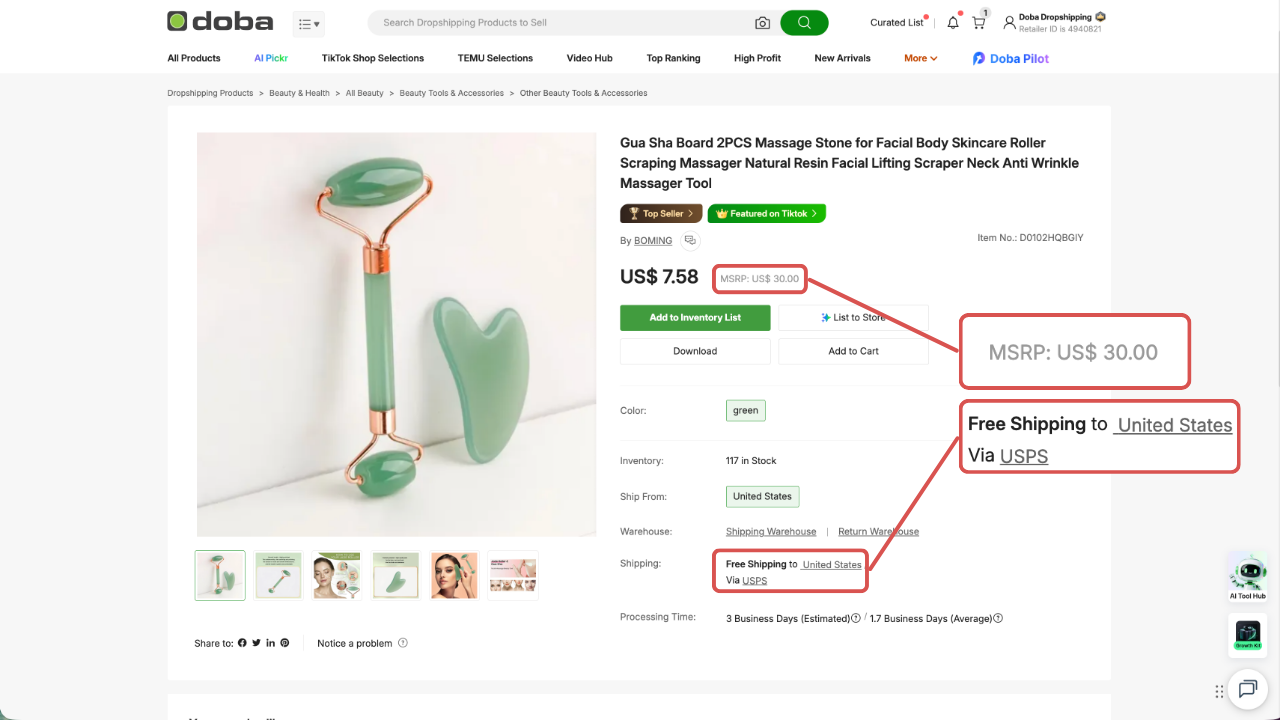
eBay's cut is fixed — you can't negotiate it. So margin is won at sourcing: a cheaper US-warehoused product cost and free or low-cost shipping mean more of every sale survives eBay's fee.
How eBay seller fees work
Three things come off a typical sale:
- A final value fee — a percentage of the total the buyer paid, item plus shipping. The percentage depends on the category you list in.
- A fixed per-order fee — a small flat amount on each order. It's negligible on a $200 item and painful on a $6 one.
- Promoted listings — optional, and set by you. This one is a decision, not a cost of doing business.
Two things adjust the percentage: reaching Top Rated Plus earns a discount, and cross-border sales add a surcharge. Both are switches in the calculator above.
What eats your eBay profit
Five costs stand between the sale price and what you keep. eBay's fees are fixed, so the levers you actually control are sourcing and shipping. Each cost is color-coded, and you'll spot the same colors in the “where each sale goes” bar in your results above and in the key-term formulas below.
What you pay your supplier — your biggest controllable cost.
What you pay to deliver — slow, costly shipping also drives refunds.
A percentage of the total the buyer pays, plus a fixed per-order fee. Current rates are prefilled above, with the date they were checked.
Your ad rate, charged on top when a promoted item sells.
Late or wrong orders erase profit — and eBay's fee on the sale.
What's a healthy eBay margin?
Under 10%, a single return or a fee adjustment wipes out the order. Above 20%, you have room to scale and to absorb the occasional bad one.
How to make more on every eBay sale
- Source cheaper, not just price higher. Every dollar off your cost lands entirely in your pocket; every dollar on your price is shared with eBay.
- Avoid very low price points. The fixed fee makes cheap items structurally harder to profit on.
- Earn Top Rated Plus. It's a permanent discount on the largest fee you pay.
- Cut returns with faster shipping. Domestic fulfillment reduces the refunds that never appear in a fee calculator.
Know the numbers behind your eBay profit
Every term comes with its formula — and the chip colors match the costs above.
How Doba helps you win on eBay
You can't negotiate eBay's fees. You can change what the item costs you and how fast it arrives — and those two decide whether the same fee percentage leaves you a business or a hobby.
- 1M+ products to start from. Vetted suppliers, so you're picking from a real catalog on day one.
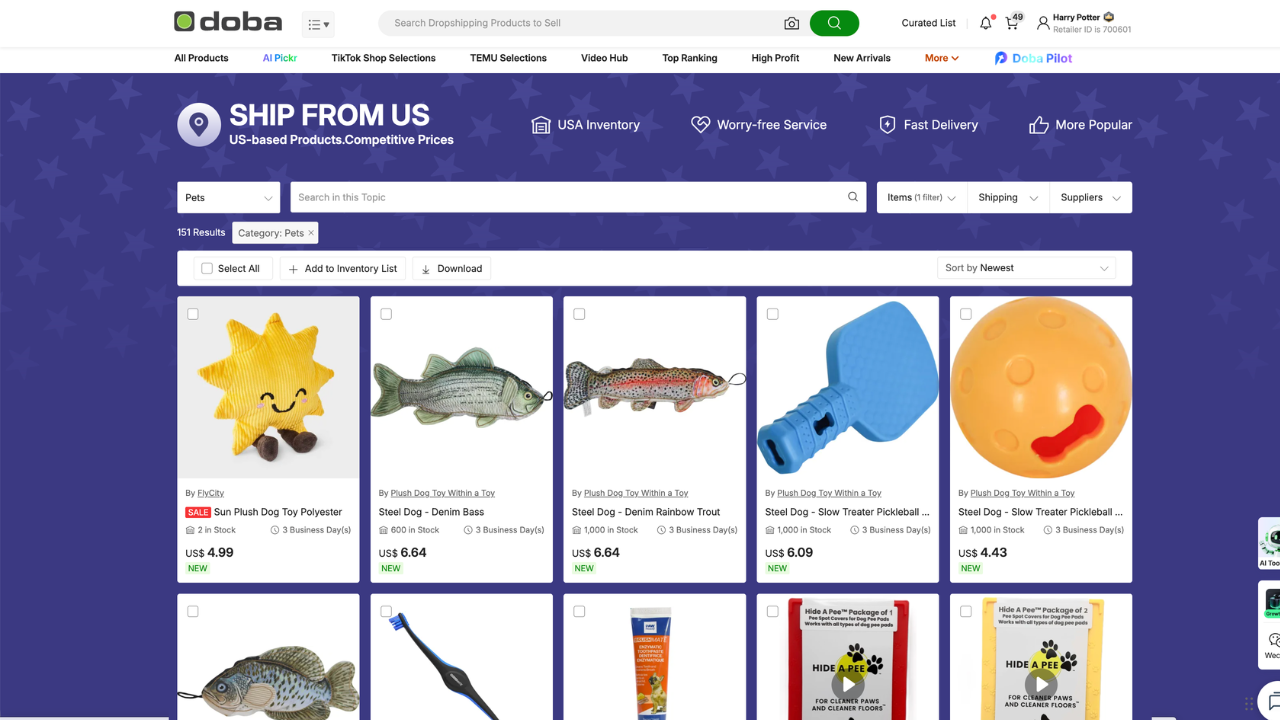
- 90%+ US-warehoused. Fast 2–7 day domestic shipping means fewer late-delivery refunds.
- No transaction fees. On any plan — the margin you calculate is the margin you keep.
- Trusted since 2002. 3.2M+ sellers have built on Doba.
You can't change eBay's cut. You can change what you sell.
eBay's percentage is fixed. What isn't fixed is your product cost, your listing quality, and your images — which is where these four AI tools work.
AI Store Builder
Get ready-to-sell in minutes.
Try it now →AI Pickr
Smarter sourcing, bigger profits.
Start sourcing →AI Listing Optimizer
Smart titles & descriptions, written by AI.
Refine listings →AI Image Studio
From compliant to scroll-stopping — in one tool.
Open the studio →From single tools to Conversational AI Agent.
Doba Pilot turns your request into action — guiding product discovery, store setup, listing and fulfillment through one conversational AI workflow.
More free tools
Browse all free tools →Frequently asked questions
How do eBay seller fees work?
Selling on eBay costs you three things on a typical order: a final value fee charged as a percentage of the total amount the buyer pays (item price plus shipping), a small fixed fee per order, and an optional promoted-listings fee if you advertise the listing. The percentage varies by category, and seller status and cross-border sales adjust it further. Because eBay updates its fee schedule from time to time, check the current rates on eBay’s own fee page before relying on any figure.
How do you calculate eBay profit?
Net profit = (item price + shipping charged) − product cost − your shipping cost − total eBay fees. Margin is that profit divided by the total the buyer paid, and ROI is the profit divided by what you actually spent on the item. This calculator does all three as you type.
What is eBay’s final value fee?
The final value fee is eBay’s commission on a completed sale. It is calculated on the total amount the buyer pays — including the shipping they were charged, which is the part sellers most often forget — and the percentage depends on the item’s category. A fixed per-order fee is charged alongside it.
Does eBay charge a fixed per-order fee?
Yes. On top of the percentage-based final value fee, eBay charges a small fixed amount on each order, and the amount depends on the order total. It barely registers on a high-priced item but takes a meaningful bite out of low-priced ones, which is why very cheap items are harder to make work than their margin percentage suggests.
How can I pay lower eBay fees?
Reaching Top Rated Plus status earns a discount on final value fees. Beyond that, the lever is not the fee rate but what you sell and what it costs you: higher-priced items dilute the fixed per-order fee, and cheaper sourcing widens the margin the percentage is taken from. Promoted listings are optional, so treat that rate as a decision rather than a cost of doing business.
What is a good profit margin on eBay?
After eBay’s cut, shipping, and product cost, a net margin above 20% gives you room to absorb returns and scale. Between 10% and 20% is workable but tight. Under 10% is risky, because a single return or a fee change can erase it.
How do I find profitable products to sell on eBay?
Start with sourcing rather than listing. Doba’s AI Pickr analyzes market trends and demand signals to surface products with real markup headroom, and Doba Pilot can run sourcing, store setup, and listings from a single request. Both draw on vetted, US-warehoused suppliers with fast 2–7 day domestic shipping that keep returns low.




